

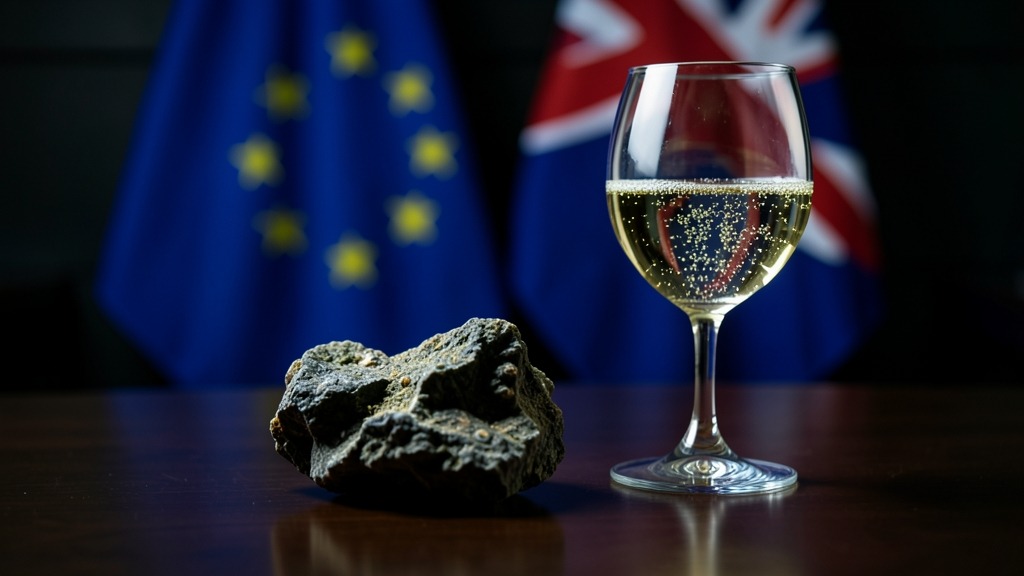
Inside the EU-Australia Free Trade Breakthrough

Clear, seedless context so the move makes sense fast. It was like a market weather report, a quick calm after a squall. After eight years of bitter negotiations, stalled talks, and agricultural standoffs, the European Union and Australia...
If you followed the collapse of the EU-Australia trade talks back in October 2023, you would have thought this deal was dead in the water. The European Union refused to open its doors to Australian beef and lamb, and Australia refused to give up the rights to use European food names like "feta" and "prosecco."
Yet, on Tuesday morning in Canberra, European Commission President Ursula von der Leyen and Australian Prime Minister Anthony Albanese put pen to paper, finalizing a deal that will eliminate tariffs on roughly 98% of goods. The agreement is projected to boost bilateral trade by 30% over the next decade, saving exporters over €1 billion annually.
To understand how this breakthrough happened—and where the capital is going to flow—we have to look at the three specific sectors that finally broke the deadlock. We are bypassing the standard "macroeconomic trends" to look directly at the mechanics of the deal.
The Supply Chain Lens: Lithium, Tungsten, and the China Hedge
The primary catalyst that brought the EU back to the negotiating table wasn't a sudden love for Australian agriculture; it was a desperate need for critical minerals.
As Europe accelerates its green energy transition, its reliance on China for raw materials like lithium (for electric vehicle batteries) and tungsten has become a massive strategic vulnerability. Australia, a global heavyweight in mining, holds the keys to Europe's supply chain independence.
The Mineral Magnet: Under this new agreement, the EU secures unfettered, tariff-free access to Australia’s critical raw materials. It also bans export taxes on these minerals, making the market highly predictable for European battery manufacturers.
The Geopolitical Pivot: By linking their economies, the EU gets a reliable, democratic supplier for its industrial base, while Australia reduces its heavy economic reliance on exports to Beijing. Alongside the trade pact, the two powers also signed a distinct Security and Defence Partnership, proving that this trade deal is fundamentally a geopolitical shield.
The Consumer Lens: The European Auto Invasion
For the everyday Australian consumer, the most immediate impact of this deal will be seen in the driveway. European vehicles—which have historically faced a stubborn 5% import tariff at the Australian border—will now enter the country duty-free.
But the real victory for the auto sector is buried in the fine print regarding electric vehicles (EVs).
The Luxury Car Tax Adjustment: Australia has maintained a controversial "Luxury Car Tax" originally designed to protect a domestic manufacturing industry that no longer exists. Under the new FTA, while the tax remains, the threshold for electric vehicles has been raised significantly to AUD 120,000 (roughly €72,000).
The Market Effect: This means a massive swath of European EVs from brands like Volkswagen, Peugeot, and entry-level luxury German models will suddenly become highly competitive against the flood of cheaper Chinese EVs currently dominating the Australian market.
The Agricultural Compromise: The "Prosecco" Sunset
The agricultural sector is where the bloodiest battles of this negotiation were fought, and the final text reveals a fascinating compromise of quotas and cultural branding.
Australia secured highly coveted access to the European market for its red meat, but not without strict caps. The EU agreed to open a tariff-rate quota of 16,830 tonnes for grass-fed beef (duty-free) and 25,000 tonnes for sheep meat. While European tariffs on Australian wine, seafood, nuts, and honey drop to zero immediately, sensitive European products like cheese will see a three-year phase-out.
But the most culturally significant concession came from Australia regarding Geographical Indications (GIs).
* The Name Game: European negotiators successfully defended their regional naming rights. Australian producers of "Prosecco"—a sparkling wine traditionally from northern Italy—will be banned from using the name on their exports after a 10-year transition period. Similar restrictions will apply to other culturally protected names. Australia effectively traded its linguistic branding for hard volumetric access to the European continent.
The "Angry Bear" Perspective: The Quota Squeeze
The skeptical view of this "historic" deal comes from the agricultural lobbies on both sides of the equator. The "Angry Bear" take is that the agricultural quotas are still too restrictive to move the needle for giant Australian meat producers.
Australian farming organizations have already warned that 16,000 tonnes of beef barely scratches the surface of their export capacity into a market of 450 million consumers. Conversely, European farmers—already protesting across the continent over environmental regulations and cheap foreign imports—are likely to view any influx of Australian red meat as a direct threat to their livelihood, potentially sparking new protests in Brussels and Paris.
The Bottom Line for Your Portfolio
The EU-Australia Free Trade Agreement is a masterclass in modern trade diplomacy, where energy security and industrial metals take precedence over traditional farming disputes.
- For European Auto & Tech: Watch the stock of European automakers with strong EV lineups. The removal of the 5% tariff and the adjustment of the Australian luxury tax threshold gives them a sudden, artificial price cut in a highly lucrative market.
- For Global Mining: Australian mining conglomerates holding lithium, rare earths, and tungsten assets just gained a massive, tariff-free buyer that is politically motivated to purchase from them rather than competitors in Asia.
- For the Beverage Sector: Australian winemakers are massive winners here, gaining immediate zero-tariff access to Europe, providing a critical relief valve for an industry that has struggled with volatile Asian tariffs over the last five years.
What to watch: Keep an eye on the implementation timeline. While the political signatures are on the page, the agreement still needs to clear domestic ratification processes in both the Australian Parliament and the European Parliament. If European farming lobbies mount a successful pressure campaign, the timeline for that final ratification could drag well into late 2026.

